
Biodegradable, compostable, recyclable: what's the difference?
Three terms we see on packaging all the time are used interchangeably, yet they do not mean the same thing. What should you look for when choosing a product?
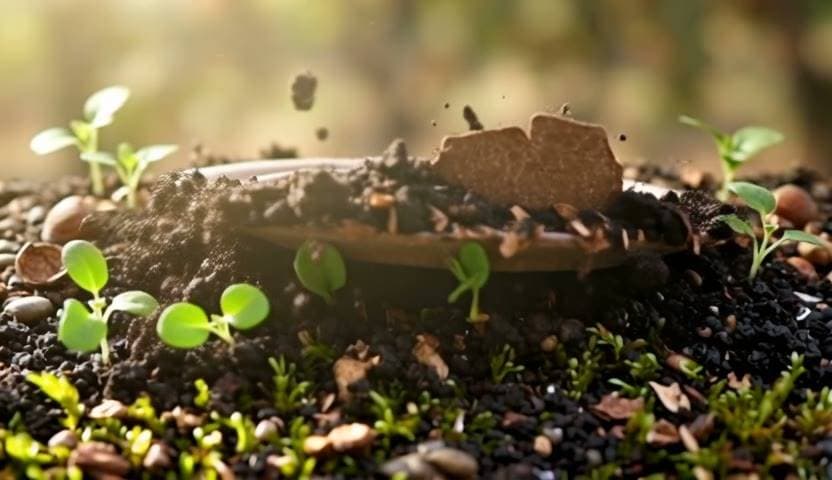
Pick up a plate labelled "eco-friendly" from a supermarket shelf and you will meet three different terms on the label: biodegradable, compostable, recyclable. Often used as synonyms, these concepts actually describe different processes, different timescales and different outcomes. To choose well, you need to know the difference.
Recyclable
This says the material can be collected, processed and turned back into raw material. Paper, glass and some plastics fall into this group. But for single-use food packaging there is a big practical problem: plastic soiled with food is not recycled at most facilities; it goes straight to incineration or landfill. Appearing on the label does not mean it will actually be recycled.
Biodegradable
This means the material can be broken down by microorganisms over time. It sounds good, but it leaves two questions unanswered: how long, and what is left behind? Some "biodegradable" plastics break down only in high-temperature industrial facilities; left in nature or at home they persist for years and fragment into microplastic.
Compostable
This is the clearest term: the material breaks down completely under defined conditions within a defined time and blends into the soil without leaving toxic residue. Here too the distinction between "industrially compostable" and "home compostable" matters. The first requires a facility running at 55–60 °C; the second can decompose in the compost heap in your garden.
“The question is not "does it break down?" but "where, how fast, and what does it leave behind?"”
Where does Biogranul stand?
Biogranul products are made entirely from agricultural waste, with no chemical binders or plastic additives. Because there is no petroleum derivative in their structure, they leave no microplastic as they break down; what remains is only the material they came from — plant fibre. This means the product can return to nature along with organic waste or in a garden compost heap, without waiting for an industrial facility.
What do certifications tell you?
International compostability standards (such as EN 13432) require a material to break down within a set time, to a set degree, and without leaving toxic residue. When choosing a product, checking which standard it was tested against is a more reliable guide than the slogans on the label. At Biogranul we are continuing the process of certifying our products to these standards.
A short checklist is enough when reading a label: Does it contain plastic or resin? Does it need a special facility to break down? What is left behind? If the answers to these three questions are clear, you know what really lies behind the words "eco-friendly".
Keep reading
 Usage
Usage Technology
 Usage
Usage